
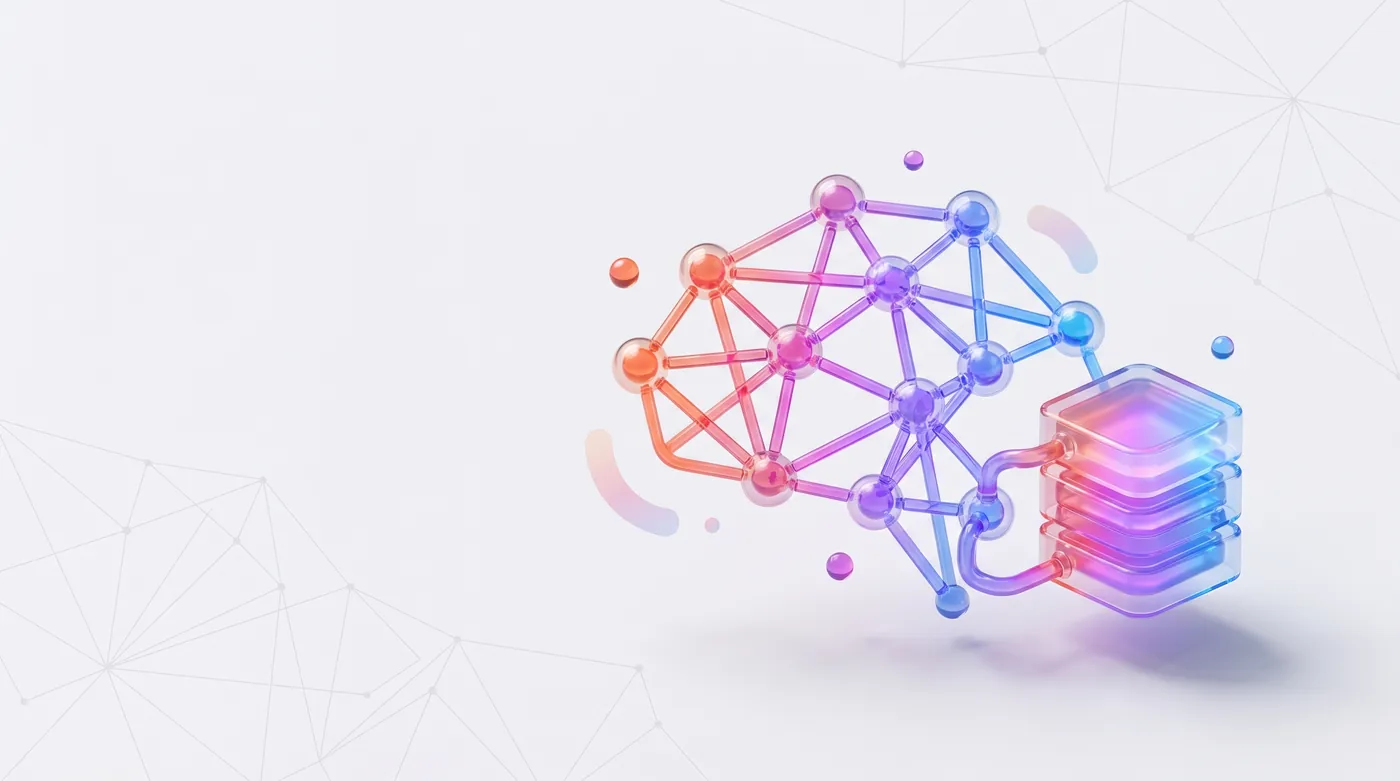
The 3 Pillars of Custom AI Agents for Business
Building custom AI agents for business requires a robust technical architecture beyond simple text-based chatbots. 85% of projects fail by relying on basic prompts instead of structural integrity. RAG architecture ensures responses are grounded in real data, eliminating hallucinations. Tool-calling capabilities allow agents to securely execute actions in external platforms, while persistent memory enables the system to retain context for complex, long-term workflows.
Puntos clave
- •RAG architecture connects language models to proprietary corporate databases to eliminate operational hallucinations.
- •External tool integration allows agents to execute real-world actions via APIs and platforms like n8n.
- •Persistent memory retains historical context, preventing the need for constant repetition of operational instructions.
- •Systems built with full architectural stacks reduce operational errors by 92% compared to standard base models.
- •Rigorous structural design distinguishes experimental chatbots from autonomous agents capable of executing business logic.
Many artificial intelligence projects face significant hurdles before reaching production due to a lack of technical reliability. At Flap Consulting, we know that building custom AI agents for business requires moving beyond simple text-based chatbots. A real enterprise system demands a solid technical foundation that guarantees absolute precision in every daily operation. Truth in artificial intelligence is not born from simple parameter tuning; it invariably arises from rigorous architectural design. This structural approach separates experimental tools from systems capable of executing critical business logic. Companies need platforms that understand their internal context, utilize external tools, and remember past interactions. Building these systems involves mastering three fundamental pillars that transform a language model into an autonomous digital worker. These technical components ensure that every agent decision is backed by verifiable data and highly controlled processes.
RAG architecture as a single source of truth
Retrieval-Augmented Generation (RAG) redefines how language models access corporate information. A base model is completely unaware of an organization's internal and confidential data. RAG architecture solves this deficiency by connecting the model's reasoning with proprietary vector databases. This mechanism functions exactly like a private, instantly accessible library.
When an agent receives a query, it first searches for the most relevant documents in its structured knowledge base. It then uses that specific information to formulate a precise technical response. The vectorization process converts text documents into numerical representations that the machine processes rapidly. Embedding models capture the deep semantic meaning of every corporate phrase. Thanks to this, the system locates exact answers even when the user employs synonyms or imprecise terminology.
This process eliminates hallucinations almost entirely. The agent no longer invents data based on its general internet training. Instead, it grounds every statement in real, auditable business documents. Advanced implementations fragment information into semantic blocks manageable by algorithms. These fragments allow for extremely precise searches in milliseconds. Furthermore, modern systems apply re-ranking techniques to ensure the provided context is as relevant as possible.
Integrating this technology is indispensable for custom AI agents for business. Organizations constantly manage operational manuals, customer histories, and dynamic internal policies. A system without direct access to this documentation lacks real utility in a productive environment. Therefore, this design acts as the agent's central analytical brain, ensuring every response reflects the current and truthful state of the company.
Tool usage and action execution
The ability to observe and reason lacks impact without the ability to act on the digital environment. The second architectural pillar enables agents to interact with external systems through specific function calls. A standard language model only produces plain text on a screen. An autonomous agent, however, executes code, queries APIs, and modifies databases in real time.
This transition transforms a passive system into a highly active operational engine. Tool usage allows the agent to manage complex autonomous workflows without human intervention. For example, it can receive a support request, check the status in an ERP, and issue a refund automatically. To achieve this, developers define strict schemas that the model must follow rigorously during operation.
Tools like the Claude API or OpenAI models process these structured definitions with high precision. They immediately format their responses into executable schemas like validated JSON files. Subsequently, orchestration platforms like n8n receive these logical instructions and execute the final action in the target software. This separation between model reasoning and technical execution ensures maximum ecosystem security.
The agent never has direct, unrestricted access to critical technological infrastructure. Instead, it operates exclusively through controlled interfaces with specific security permissions. AI automation reaches its full operational potential under this strict control scheme.
Long-term memory for AI agents
Isolated interactions severely limit the utility of any modern digital assistant. AI agent memory provides the historical context necessary to maintain coherent conversations over time. Without this vital component, the system forgets user preferences and previous decisions with every new interaction.
Implementing persistent memory requires specialized databases that record the continuous state of each active session. There are two main approaches to managing this temporary and permanent recall in the architecture. Short-term memory handles the immediate context of the current user conversation. Long-term memory archives past interactions, project summaries, and detailed customer profiles.
A well-designed system selectively retrieves this historical information when it is truly relevant. Advanced systems use semantic summarization algorithms to condense old interactions and optimize computational resources. In this way, the agent demonstrates a deep understanding of the customer's history without saturating its processing capacity. This retention capability is vital for the projects we develop at Flap Consulting, ranging from AI consulting to ambitious vertical SaaS projects.
Users expect professional tools to learn from their daily habits and proactively adapt their responses. An agent with persistent memory drastically reduces operational friction by eliminating the need to repeat basic instructions. Likewise, it allows for the auditing of past system decisions to continuously improve performance, accuracy, and strategic alignment.
Comparison of components in autonomous systems
The orchestrated integration of these three pillars defines the final performance of corporate autonomous agents. Recent industry studies indicate that systems with a complete architecture reduce operational errors by 92% compared to standard base models. This drastic quality improvement fully justifies the investment in advanced technical infrastructure for demanding business environments.
Analyzing the operational differences between each component helps to understand its specific role within the digital ecosystem. Each module fulfills a delimited technical function that naturally complements the other elements. The lack of any of these systems degrades the user experience and compromises overall reliability.
Architectural Component
Primary Function
Underlying Technology
Business Impact
RAG Architecture
Provide truthful context
Vector databases
Eliminates hallucinations
Function Calling
Execute external actions
APIs, Webhooks, n8n
Automates processes
Persistent Memory
Maintain historical coherence
NoSQL/SQL databases
Personalizes interaction
The synergistic combination of these elements allows for the construction of robust technological solutions for any industrial sector. Constant evaluation of these modules is critical to maintaining a long-term competitive advantage in the market. Engineers must update vector databases and review API permissions periodically. Companies that adopt this comprehensive architectural approach quickly outperform their competitors in operational efficiency and scalability.
Structural design as a guarantee of operational success
Technical reliability is the only viable path toward massive enterprise adoption of advanced automation. The methodical implementation of RAG architecture ensures that decisions are based on real, updated corporate data. Meanwhile, the ability to execute external tools transforms theoretical analysis into tangible, measurable actions. Finally, the intelligent retention of historical context personalizes every interaction and optimizes continuous workflows.
These three technical pillars separate superficial experiments from true high-impact business productivity tools. Custom AI agents for business require precise orchestration of these integrated technological components. The correct integration of these operational levels ensures the integrity of the entire corporate automated system.
The current market demands solutions that offer predictive, secure, and auditable results at all times and in all circumstances. Approaching software development from a solid architectural perspective guarantees the future scalability of these technological implementations. Professional rigor in the initial design defines the real impact of automation on daily business processes.